Building and history
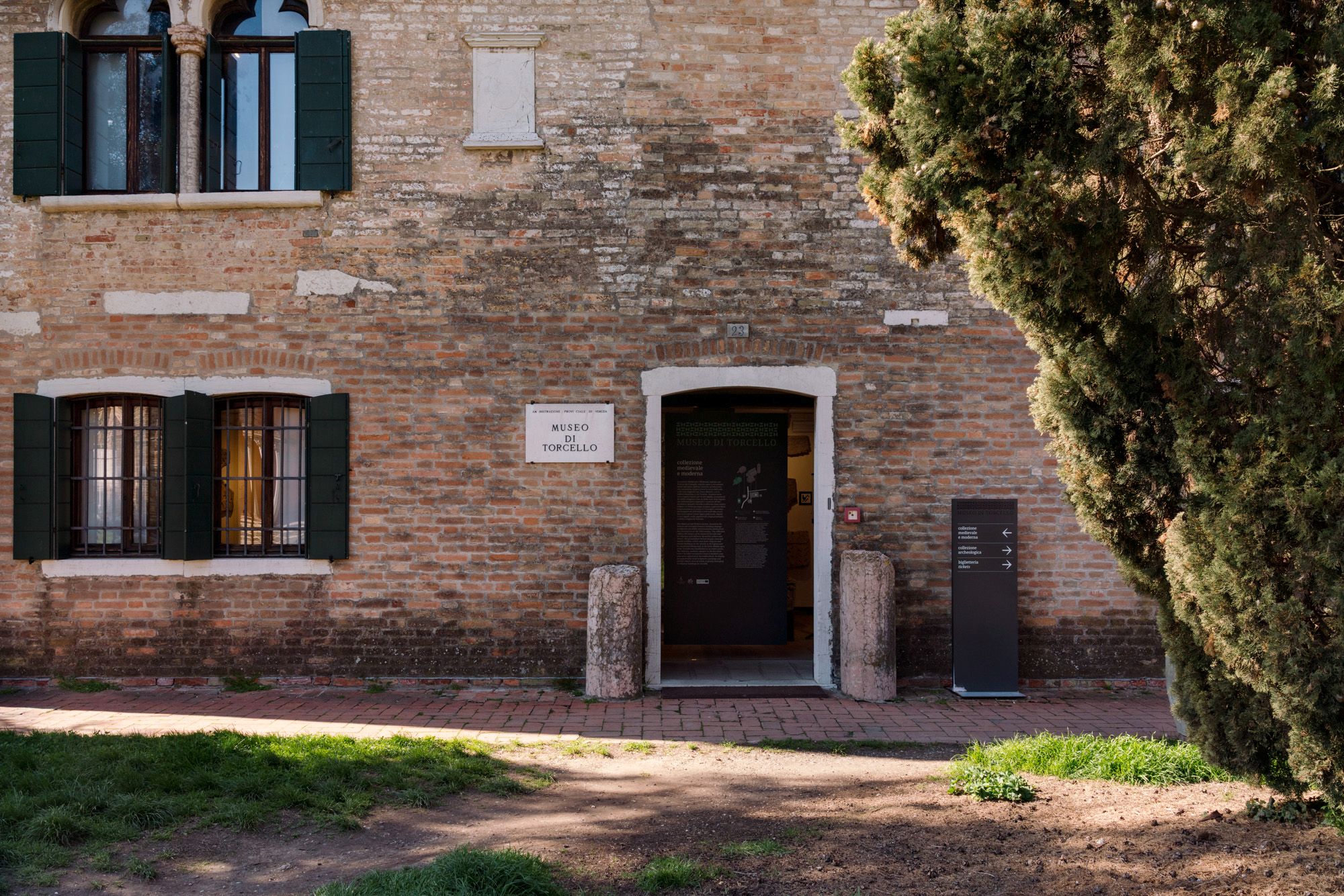
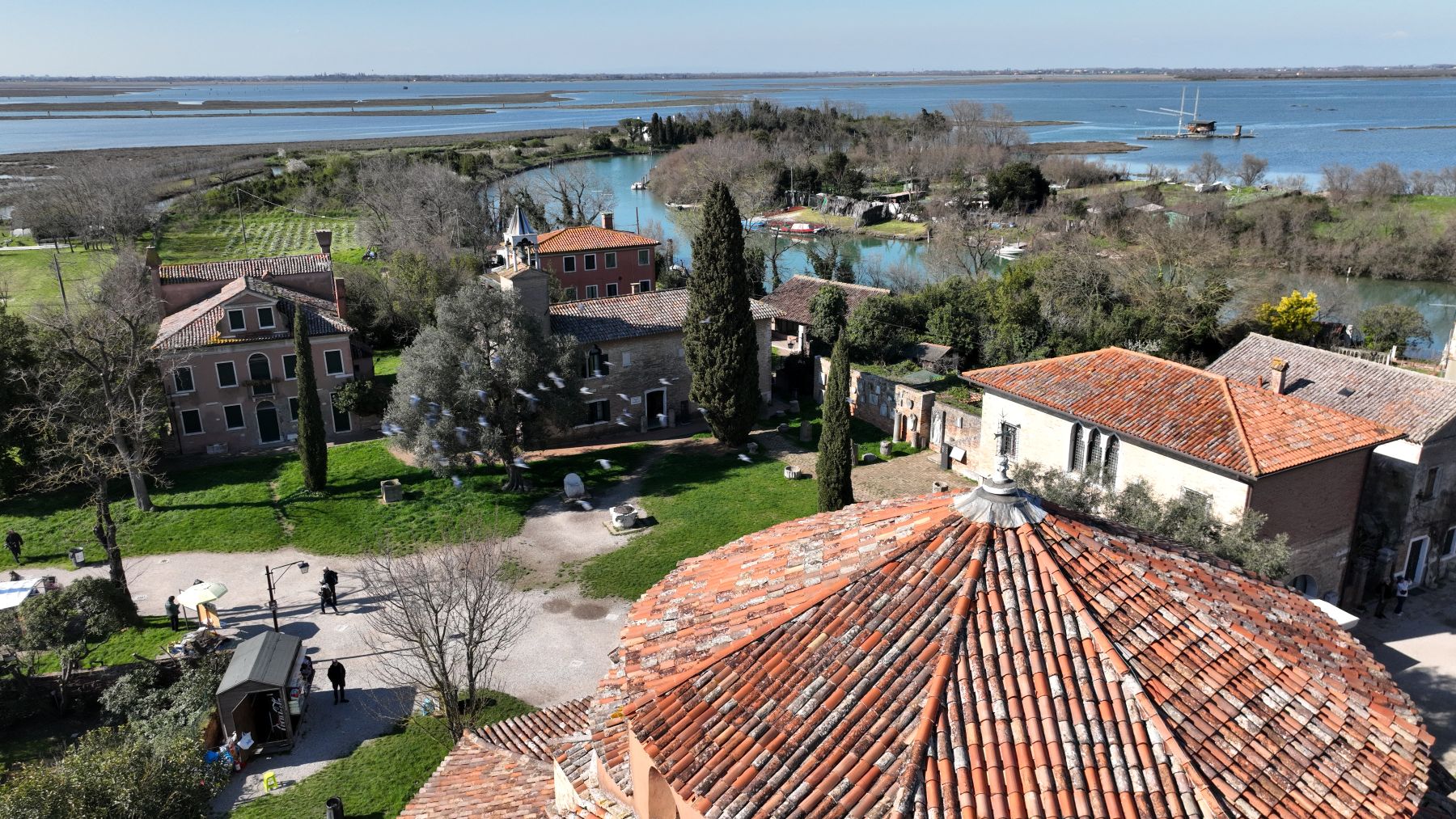
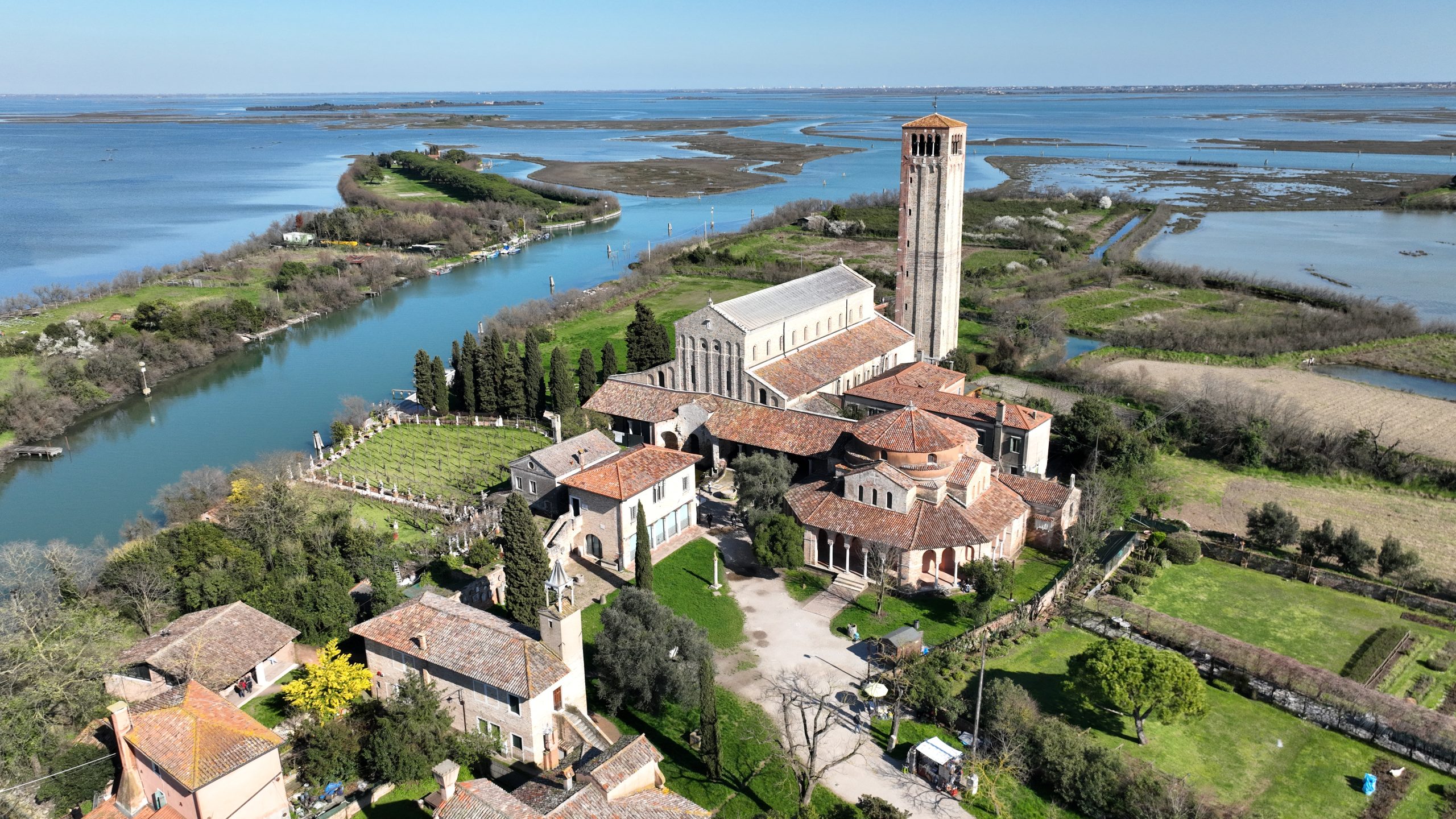
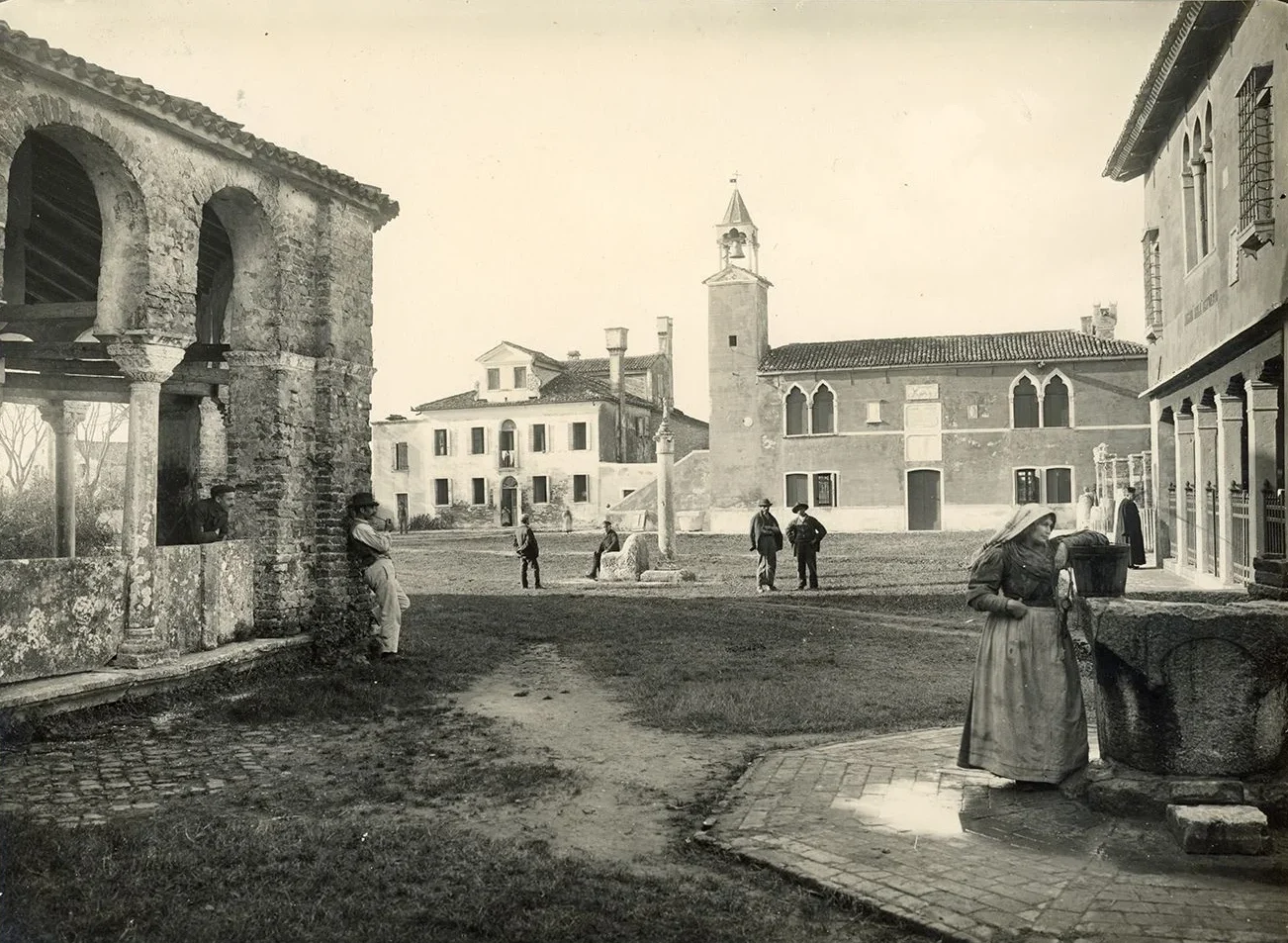
The Torcello Museum is located in the island’s Piazzetta, dominated by the imposing early-medieval complex comprising the Cathedral of Santa Maria Assunta, its Baptistery, and the Church of Santa Fosca.
The Museum occupies two buildings. The Palazzo dell’Archivio, featuring a ground-floor loggia dating back to the 11th-12th century, is believed to have housed the Torcello Archive for centuries and now hosts the archaeological section. The 14th-century Gothic Palazzo del Consiglio, where the «Council» of Torcello citizens once convened, currently houses the early medieval section and the picture gallery.
The Museum’s history begins in 1870 when Senator Luigi Torelli, then prefect of Venice, decided to purchase and restore the Palazzo del Consiglio to gather artifacts from Torcello, the northern lagoon islands, and the nearby mainland, home to ancient Altinum. Two years later, in 1872, Torelli donated the property to the Province of Venice, which established the Provincial Museum. Nicolò Battaglini, a prolific writer and antiquities enthusiast, was its first director and compiled the museum’s first manuscript inventory.
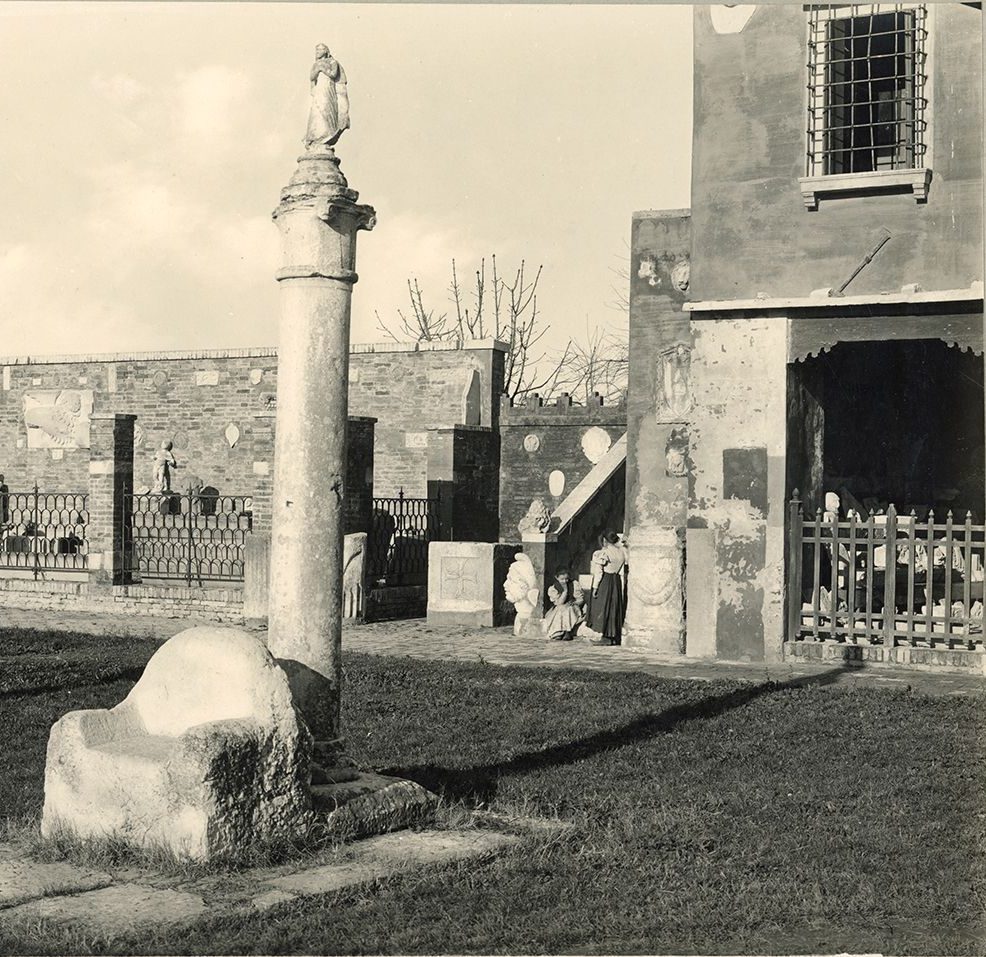
Following Battaglini’s death in 1887, the museum’s direction was assumed by Cesare Augusto Levi – a banker, collector, and antiquities scholar – who held the position until 1909. In 1887, Levi purchased the second surviving building on the Piazza, the Palazzo dell’Archivio, since the Palazzo del Podestà, which originally stood between the two, had been destroyed. After restoring it, he transferred the archaeological collections there, formally named it the Museum of the Estuary, and subsequently donated the entire complex to the Province of Venice. On May 14, 1889, the Torcello Provincial Museum was officially inaugurated.
An antiquities enthusiast, archaeologist, and polymath, Levi continued researching and rescuing artifacts found on Torcello and other northern archipelago islands. In the autumn of 1887, he conducted two excavation trenches in the central area of ancient Altinum, publishing the results the following year. The archaeological collection grew steadily – half of which, according to Levi, originated from Altinum – while his frequent travels, especially to Rome, brought diverse materials from other origins into the museum’s collections.
Levi was responsible for two catalogs of the Museum’s materials. The first, written anonymously but unanimously attributed to him, Catalogo degli oggetti di antichità del Museo Provinciale di Torcello con brevi notizie dei luoghi e delle epoche di rinvenimento (Catalog of Antiquities of the Torcello Provincial Museum with Brief Notes on the Places and Eras of Discovery, 1888), is of fundamental importance for understanding the approximately one thousand artifacts that comprised the collection at the time. The second, dating to the following year, is much more concise and uses a different numbering system for the artifacts.
In 1909, Levi was succeeded by Luigi Conton, a fellow archaeologist, a profound connoisseur of the Venetian lagoon, and the promoter of the first excavation in the Adria necropolis, from which some artifacts were transferred to the Torcello Museum. His successor was Adolfo Callegari, who directed the Museum until 1949. An archaeologist and Director of the Atestine National Museum of Este, Callegari reorganized the Torcello collections between 1928 and 1930, cataloged the archaeological materials, initiated a new inventory, and published Il Museo di Torcello (1930), a catalog documenting the division of the collections within the two palazzos according to their current layout.
Giulia Fogolari, an archaeologist particularly renowned for her studies on the ancient Veneti civilization, took over from Callegari in 1949. During the 1970s, assisted by Curator Guido Zattera, she oversaw the radical renovation of the medieval and modern section of the Museum, housed in the restored Palazzo del Consiglio. This was followed by the restoration of the Palazzo dell’Archivio and the subsequent redisplay of the archaeological section, which reopened to the public in the summer of 1990 after a decade of closure.
Following the end of Giulia Fogolari’s mandate in 1997, the Museum’s management was entrusted to officials from the Province of Venice and, later, the Metropolitan City. In 2026, the Torcello Museum was acquired by the Fondazione Musei Civici di Venezia, to which it now belongs.
Historical photographs: U.C.A. © Archivio Fotografico – Fondazione Musei Civici di Venezia